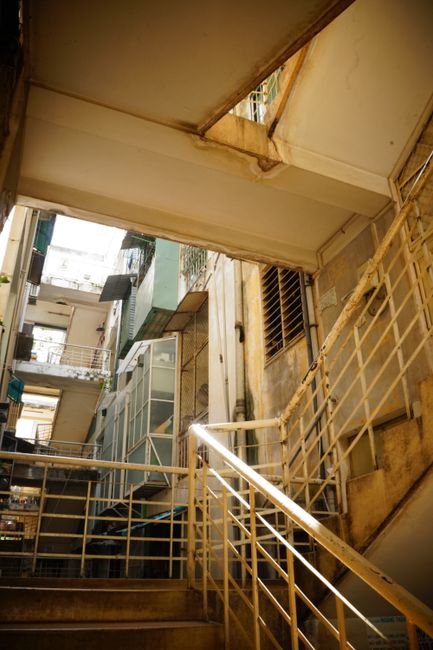
Difficult access cleaning Hammersmith narrow stairwells: a practical guide for awkward London properties
If you live or work in Hammersmith, you probably know the type of building we mean: tight landings, steep turns, old Victorian or converted-studio staircases, and just enough room to make carrying a vacuum feel like a small expedition. Difficult access cleaning Hammersmith narrow stairwells is all about getting those awkward spaces properly cleaned without damaging walls, rails, paintwork, or the cleaner's back. It sounds niche, but it's a very real problem in London buildings, especially where access is cramped and the stairwell seems to shrink the moment anyone tries to carry equipment through it.
This guide explains how the work is planned, what makes it safer and more effective, and what to expect if you're comparing options. You'll also find practical tips, a checklist, a comparison table, and the sorts of questions people actually ask before booking. In our experience, the difference between a decent result and a stressful one is usually preparation. Not glamour, just preparation.
Why difficult access cleaning in narrow Hammersmith stairwells matters
Narrow stairwells are not just inconvenient. They create a chain of small risks that can quickly turn into bigger ones: scuffed paint, knocked corners, missed dust on high ledges, dust drifting into hallways, and cleaners struggling to move safely between floors. If a stairwell is the main route into a flat, office, or shared building, then poor cleaning can affect the whole property's first impression. And yes, first impressions count more than we like to admit.
In Hammersmith, many buildings have older layouts, split-level entrances, basement steps, narrow communal corridors, and awkward bends that make standard cleaning methods less effective. The issue is not just size; it's geometry. A staircase can be technically wide enough to pass through, yet still be difficult to clean because of tight angles, low ceilings, decorative banisters, or delicate finishes that need a lighter touch.
For landlords, managing agents, office occupiers, and homeowners, the practical reason is simple: grime builds up where people touch most often. Handrails, banisters, nosings, light switches, skirting edges, and the corners of each tread collect finger marks and dust surprisingly fast. If the area is neglected for weeks or months, you notice it the second you walk up the stairs. It's one of those little things that makes a place feel tired.
There is also a safety side. Dust, loose debris, wet floors, and badly placed equipment can all create slips or trip hazards. In confined spaces, one careless move can mean chipped plaster or a cleaner losing balance. So difficult access cleaning is really a combination of cleaning skill, spatial planning, and cautious movement. That is the job, properly understood.
If you want to understand how a professional cleaning company approaches these tricky areas more broadly, it can help to read about a trusted cleaning company and its wider service standards. For more background on the team behind the service, you can also visit the about us page.
How difficult access cleaning Hammersmith narrow stairwells works
The best results start before any cloth or vacuum appears. A good cleaner begins with a quick access review: width of the staircase, landing space, turning points, flooring type, nearby fixtures, and what can be carried without causing damage. In practical terms, that means deciding whether tools need to be broken down into smaller parts, whether lightweight equipment is enough, and whether some tasks should be done from the top down rather than the bottom up.
Once the space has been assessed, the work usually follows a careful sequence. Dry debris is removed first so grit does not turn into muddy marks. Then high-level dust is addressed, followed by hand-contact surfaces such as rails and banisters. After that, the stair treads, risers, edges, and skirting lines are cleaned. If the stairwell includes windows, glass panels, or painted woodwork, these are handled with the right product and minimal moisture. Too much liquid in a confined staircase is a bad idea. It can leave streaks, seep into joints, or make the surface slippery.
For shared buildings, the cleaning plan also needs to account for people moving through the stairwell during the job. That may mean working in sections, using clear signage, and keeping one side of the staircase open where possible. The cleaner should not turn the route into an obstacle course. Nobody wants that at 8:15 on a weekday.
Where the stairwell connects to other services, such as deep cleaning or routine domestic cleaning, the method can be adapted so the whole property feels consistent. In a household setting, stairwell work may be combined with a broader refresh, while in offices it may sit alongside office cleaning or periodic maintenance. The key is matching the method to the space, not forcing the space to fit the method.
Key benefits and practical advantages
Done well, difficult access cleaning does more than make stairs look tidy. It helps the whole building function better. People notice cleaner stairs every day, even if they never comment on it. That quiet improvement has value.
- Better presentation: Stairwells are often one of the first areas seen by visitors, tenants, and staff.
- Reduced wear: Regular cleaning helps limit abrasive grit that can damage paint and flooring over time.
- Safer movement: Removing dust, debris, and residue lowers slip and trip risks.
- Less disruption: A planned approach keeps access open and avoids unnecessary mess.
- More thorough cleaning: Tight corners, rail spindles, and awkward ledges are dealt with properly.
- Better long-term upkeep: A clean stairwell is easier to maintain between visits.
There's also a psychological benefit. A cramped stairwell can feel even tighter if it's dark and dusty. Clean paintwork, clear treads, and fresh handrails make the space feel brighter and more manageable. You may not think about it much after the job, which is the whole point. It fades into the background, quietly doing its job.
For properties with mixed surfaces, it may make sense to combine stairwell cleaning with hard floor cleaning if the stairs or landings are stone, vinyl, sealed wood, or tile. If the route includes nearby soft furnishings in a reception area or upper hallway, services such as sofa cleaning or upholstery cleaning may also be sensible in a larger package.
Who this is for and when it makes sense
This kind of cleaning is useful for a surprisingly wide range of people. It is not only for big commercial buildings or old houses. Any property with awkward access can need it, and often at short notice.
- Landlords and letting agents: Especially where stairwells are part of an end-of-tenancy handover.
- Homeowners in period conversions: Older staircases often need a careful, slower approach.
- Flat-share residents and managing agents: Shared access routes collect more traffic and more dirt.
- Offices in converted buildings: Narrow communal stairs can be the main access point for staff and visitors.
- Post-refurbishment properties: Dust from works tends to settle in stair corners and on skirting lines.
- House clearance situations: Moving items in and out can leave marks and debris behind.
It makes sense when standard cleaning is not enough, when access is physically awkward, or when the building has details that need extra care. For example, a painted timber rail can be wiped too aggressively by someone rushing. A professional approach avoids that. It also helps when the job must fit around residents or staff who still need access through the stairwell.
If the property needs a broader reset after works or moving day, the stairwell task may sit alongside after builders cleaning, end of tenancy cleaning, or a one-time visit such as one off cleaning. That mix is often the sweet spot. Not too much, not too little.
Step-by-step guidance
Below is a practical way to think about the process. It is simple on paper, but the order matters a lot in real life.
- Check access properly. Measure the narrowest points, note the turn radius, and identify any fragile areas such as glass, radiators, or fresh paint.
- Clear the route. Remove loose objects, mats, parcels, and anything that could block movement or collect dust.
- Protect sensitive surfaces. Use appropriate coverings where needed, especially near corners, frames, and flooring edges.
- Remove dry debris first. Dust, grit, and cobwebs should go before any damp cleaning starts.
- Work from higher to lower points. This keeps dust from falling onto already-cleaned areas.
- Clean touch points carefully. Handrails, switches, bannisters, and edge trims need a gentle but thorough finish.
- Detail the awkward bits. Stair spindles, corners, undersides, and skirting edges are where neglect shows.
- Check for streaks or slips. In a narrow stairwell, a missed damp patch can become a hazard.
- Finish with a final walk-through. Look at the staircase from both ends, because issues often show up differently from each side.
If carpeted steps are involved, the method changes slightly. A specialist carpet cleaner may be needed rather than a general wipe-down, particularly if the fibres have absorbed traffic grime or boot marks. For properties where carpets extend beyond the stairs, services such as carpet cleaning or a dedicated carpets cleaner can be worth considering. And yes, that distinction matters more than people think.
One more thing: pace yourself. Rushing through a narrow stairwell usually creates more work later. A steady rhythm wins here. Every time.
Expert tips for better results
Small improvements make a huge difference in tight spaces. In our experience, these are the habits that separate a tidy result from a really solid one.
- Use compact equipment: Lightweight machines and short-handled tools are easier to control on awkward steps.
- Keep moisture under control: Damp cloths are usually safer than wet ones in confined stairwells.
- Protect edges early: Corners and rail ends are often the first to get scuffed.
- Choose the right cloth for the surface: Soft microfibre suits many painted and polished areas, while textured pads can help on harder grime.
- Think about airflow: Even opening a nearby window can help reduce lingering smell from cleaning products.
- Work in daylight where possible: Natural light shows dust and smears that artificial light sometimes hides.
Here's a very ordinary example. A narrow stairwell in a Hammersmith conversion looked clean at first glance, but the upper landing kept showing a faint grey film by late afternoon. The issue was not the landing itself; it was dust trapped on the top edge of the banister and drifting down again. Once that was dealt with properly, the whole space stayed cleaner longer. Simple, but easy to miss.
If you are booking a cleaning team, it is worth asking how they handle access-limited jobs. Good cleaners should be able to explain how they move equipment, protect surfaces, and keep the route usable while they work. If they sound vague, that's a bit of a red flag.
For peace of mind around business standards and handling of keys, insurance, and general trust factors, it can also help to review pages such as insurance and safety and the company's health and safety policy. Those pages are not just formalities; they tell you a lot about how a provider thinks.
Common mistakes to avoid
There are a few classic errors that crop up again and again in narrow stairwells. Honestly, they are easy to make if you are in a hurry.
- Using too much water: It can damage finishes and create slip risk.
- Skipping the access check: This often leads to awkward manoeuvres and scuffed walls.
- Cleaning from the bottom up: Dust falls, so the order matters.
- Ignoring hand-contact zones: Railings and switch plates can make the whole area look tired if missed.
- Forgetting the corners: Narrow staircases hide dust in places you only spot when the light hits them just right.
- Bringing oversized tools: Big equipment can be more trouble than it is worth.
- Not protecting freshly painted surfaces: A careless brush or sleeve can leave a mark very quickly.
Another common issue is trying to do the whole job in one pass with no pause for inspection. A short check at the end saves time later. That sounds obvious, but in tight internal spaces, obvious is often what gets forgotten.
Tools, resources and recommendations
You do not need a mountain of gear for this kind of work. In fact, less is often better. The best toolkit is the one that can move easily, clean accurately, and avoid unnecessary disruption.
| Tool or item | Best use | Why it helps in narrow stairwells |
|---|---|---|
| Microfibre cloths | Dusting rails, skirting, and hand-touch surfaces | Light, flexible, and less likely to snag |
| Compact vacuum | Removing grit from steps and landings | Easier to carry and manoeuvre |
| Soft detailing brush | Spindles, corners, and trims | Gets into awkward joints without harsh pressure |
| Neutral cleaning solution | General wiping of painted or sealed surfaces | Helps avoid residue and surface damage |
| Small step stool, if safe | Higher ledges or light fittings | More controlled than overreaching |
For larger jobs, it may be sensible to combine stairwell cleaning with a broader service such as house cleaning or home cleaners so the whole property feels consistent. In office settings, pair it with office cleaners if the staircase leads into a busy work area. And for properties with a lot of glass in the communal route, window cleaning may be a smart add-on.
There are also practical admin pages worth checking before booking a provider, especially around trust and expectations. For example, pricing and quotes is useful for understanding how work is estimated, while terms and conditions sets out the basics clearly. If recycling or waste handling is part of the job, recycling and sustainability can give a helpful sense of approach.
Law, compliance, standards and best practice
For most readers, the main compliance concern is not a complex legal issue; it is safe, sensible working practice. In the UK, cleaners and property managers are generally expected to manage risks properly, avoid creating hazards, and handle access routes in a way that protects residents, workers, and visitors. In a narrow stairwell, that means clear communication, stable footing, sensible equipment choices, and careful control of slips, trips, and collisions.
Best practice usually includes:
- keeping escape routes and shared access clear where possible;
- avoiding blocked landings or unsecured tools;
- using cleaning products appropriately for the surface;
- minimising wet residue on floors and handrails;
- checking the route before and after the job;
- making sure any team member understands the space before starting.
If the property is a managed building, it may also be sensible to align the cleaning visit with the site's access rules or building instructions. Nothing dramatic. Just basic coordination. It saves a lot of back-and-forth.
Trust matters here too. Insurance, safety procedures, and complaint handling are all part of choosing a reliable provider. If you want to review how a company presents those basics, pages like accessibility statement, complaints procedure, and payment and security can be reassuring. They help set expectations before anyone starts climbing stairs with equipment in hand.
Options and method comparison
Not every difficult access stairwell needs the same approach. The best option depends on surface type, traffic level, and how tight the route really is. Here is a simple comparison that may help.
| Method | Best for | Advantages | Limitations |
|---|---|---|---|
| Manual detail clean | Delicate stairwells, painted wood, small shared areas | Very controlled, careful around finishes | Slower on larger or heavily soiled spaces |
| Vacuum plus wipe-down | Everyday maintenance in busy buildings | Fast, practical, good for routine upkeep | May not be enough for embedded grime |
| Deep stair clean | Post-build, move-in, or neglected stairwells | More thorough, better for visible buildup | Takes longer and may require more preparation |
| Combined property clean | Homes or offices needing a larger reset | Consistent finish across the building | Needs more planning and coordination |
As a rule of thumb, the tighter the access, the more useful a manual and detail-led method becomes. Machines are great, but they are not magic. Sometimes a cloth, a light touch, and patience win the day.
Case study or real-world example
A typical Hammersmith scenario might look like this. A converted Victorian building has a narrow communal stairwell leading to three flats. The stairs are painted wood, the landing has a small window, and the bannister collects fingerprints because everyone naturally grips the same spot. There is also a small ridge of grit on each step from repeated foot traffic.
The work starts with a quick clear-up of loose debris and any items left on the landings. After that, the cleaner addresses the upper dust first, then the rail, then the step faces and edges. The tricky bit is the turn halfway up, where the staircase narrows and the wall sits very close to the rail. That corner needs slower movement and a smaller tool. Nothing fancy. Just control.
At the end, the stairwell looks brighter, the rail feels clean rather than sticky, and the small window lets in a bit more light. It is the sort of change that residents notice straight away, even if they don't say much. One resident might mutter, "That's better," and keep heading upstairs. Which, honestly, is usually the highest praise you get in shared spaces.
If the same building also needed stair-adjacent fabric or floor work, the visit could be expanded to include rug cleaning in a hallway or oven cleaning and oven cleaner support as part of a broader domestic reset. That kind of bundling is often more efficient than separate appointments.
Practical checklist
Use this before booking or before a team arrives. It keeps things simple and reduces the chance of surprises.
- Measure the narrowest point of the stairwell.
- Note any sharp turns, low ceilings, or tight landings.
- Identify fragile surfaces such as painted wood, glass, or polished stone.
- Remove loose items from steps and landings.
- Confirm whether the stairs are carpeted, hard-surfaced, or mixed.
- Decide whether the job is a maintenance clean or a deeper restorative clean.
- Check if residents, staff, or visitors will need access during the clean.
- Make sure cleaning products suit the surface and finish.
- Plan for drying time if any damp cleaning is needed.
- Do a final inspection from top and bottom of the stairs.
Expert summary: difficult access stairwell cleaning is not about brute force. It is about fit. The right tools, the right sequence, and a bit of patience usually deliver a better finish than trying to power through with oversized equipment.
Get a free quote today and see how much you can save.
If you are comparing providers, it is sensible to ask about experience with confined spaces, insured working practices, and how they handle shared access. A calm, well-planned visit is worth far more than a rushed one. The best teams make the awkward bits look easy, which is rather the point.
Conclusion
Difficult access cleaning in Hammersmith narrow stairwells is one of those jobs that looks straightforward until you actually stand in the space. Then the little details matter: the turn of the rail, the width of the landing, the finish on the paint, the grit underfoot, the need to keep everyone moving safely. When the process is planned properly, the result is cleaner, safer, and easier to maintain.
Whether you are dealing with a shared hallway, a period conversion, an office access route, or a post-refurbishment stairwell, the right approach is the same: assess carefully, work methodically, and protect the space as you go. That steady, practical mindset goes a long way.
And if your staircase feels like it was designed by someone who never once carried a vacuum up it, well, you are not imagining things. Some spaces just need a bit more care. Luckily, that is exactly the kind of job where patience pays off.
Frequently Asked Questions
What does difficult access cleaning in narrow stairwells actually include?
It usually includes detailed dust removal, handrail and banister cleaning, step and landing cleaning, edge work, and careful handling of tight corners or fragile finishes. The exact method depends on the surface and how limited the access is.
Why are narrow stairwells harder to clean than normal hallways?
They combine limited movement space with awkward angles, more touch points, and a higher chance of scuffing walls or leaving damp patches. Even simple tasks take more planning because there is less room for equipment and less margin for error.
Is this the same as deep cleaning?
Not exactly. Difficult access stairwell cleaning can be part of a deep clean, but it is specifically about challenging movement, tight access, and careful working in confined spaces. A deep clean may cover more rooms or more surfaces overall.
How often should a narrow stairwell be cleaned?
That depends on foot traffic. Shared building stairwells often need more frequent attention than private ones, while lightly used stairs may only need periodic detailed cleaning. If grit or marks build up quickly, more regular visits make sense.
Can carpeted stairs be cleaned in a narrow stairwell?
Yes, but the method must suit the space. Carpeted stairs often need a compact vacuum and, where appropriate, specialist carpet cleaning. The key is controlling equipment movement so the carpet, walls, and rails are not damaged.
What should I prepare before the cleaner arrives?
Clear loose items from the stairs and landings, note any fragile spots, and make sure access will be available. If residents or staff need to pass through during the clean, it helps to share that in advance so the work can be planned around it.
Is it safe to use a lot of water on stair treads and landings?
Usually not in a narrow stairwell. Too much moisture can create slip risks and may harm certain finishes. A controlled, low-moisture method is normally safer and easier to manage in confined spaces.
Do cleaners need special tools for difficult access areas?
Often, yes. Compact vacuums, microfibre cloths, soft brushes, and small detailing tools are usually more effective than bulky equipment. In tight spaces, control matters more than size.
How do I know if a cleaning company is suitable for awkward stair access?
Ask how they assess access, what equipment they use, and how they protect walls, railings, and flooring. A good company should explain its approach clearly and sound calm about tight spaces, not vague or rushed.
Can this be combined with other services?
Yes. It is often combined with services such as domestic cleaning, office cleaning, end of tenancy cleaning, after builders cleaning, or hard floor cleaning, depending on the property and the reason for the visit.
What are the biggest mistakes people make with narrow stairwell cleaning?
The most common mistakes are using too much water, skipping the top-down order, bringing oversized tools, and missing dust in corners or on rail edges. Those little errors add up fast in a tight space.
Is there any special compliance issue I should think about?
The main concern is safe working practice: keeping routes clear, controlling slips and trips, and using suitable methods for the surface. For managed buildings, it is also sensible to follow site access rules and communicate with residents or staff before starting.
What is the best next step if my stairwell is very awkward?
Take a quick note of the narrow points, the surfaces involved, and whether the space is shared or private. Then request a quote from a provider that understands access-limited cleaning and can explain how they will handle the job carefully from the outset.